Arriving in Corfu
Corfu was our first stop, and a good place to adjust the eye: the old town looks Italian before it looks Greek. That is no accident. Venice held the island for about four centuries, from 1386 until the Republic itself fell in 1797, and the Ottomans, who took almost everything else in this part of the world, never managed to take its fortified town.
Two sieges
The Ottomans tried seriously more than once, most famously in 1537 and again in 1716. The second siege is the one Corfiots still remember. Ottoman troops landed and overran much of the island, but the Venetian garrison under the German-born commander Johann Matthias von der Schulenburg held the town for six weeks. After a last failed assault a violent storm broke, and the Ottomans withdrew. Historians see the main reason elsewhere: their army had just been defeated at Petrovaradin and was needed in the north.
The islanders gave the credit to their patron saint, Spyridon. His relics are still kept in the church named after him in the old town, and they are carried through the streets in procession several times a year; the procession on 11 August commemorates 1716.
Layers on the seafront
After Venice came the French, then a Russian-Ottoman protectorate, the French again, and finally the British, who handed the Ionian Islands to Greece in 1864. Each left something behind. The Liston, the arcaded promenade beside the Spianada square, was built under French rule in 1807, inspired by the Rue de Rivoli in Paris. The British left cricket, which is still played on the same square.
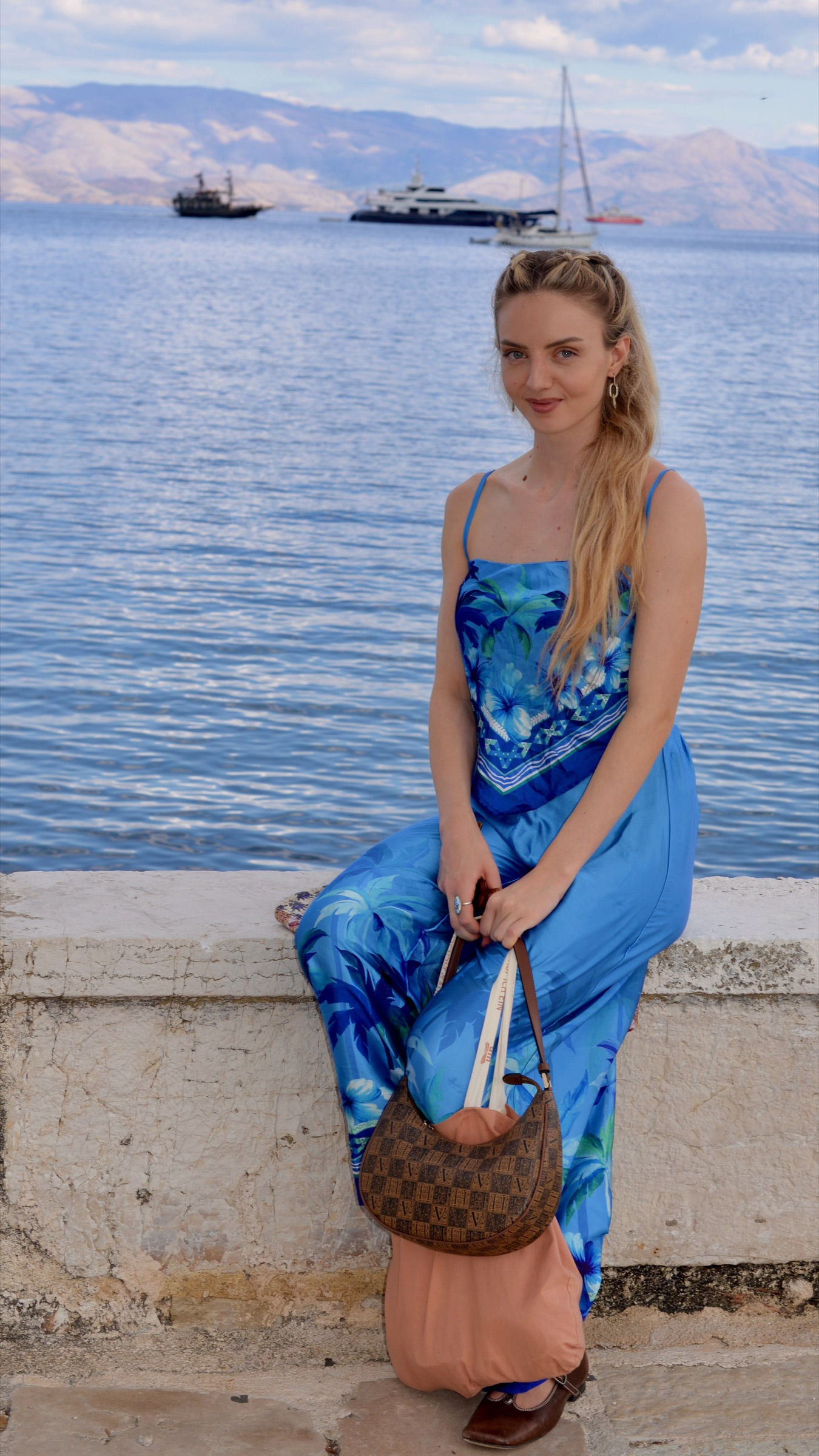
The view from the seawall goes across the strait to the mainland: the same mountains of Epirus we would be driving through a few days later.