A day in Parga
Parga looks immediately legible from the waterfront: steep houses, a bay, a small island with a white chapel, and a castle above it all. The history becomes less tidy as soon as you start reading.
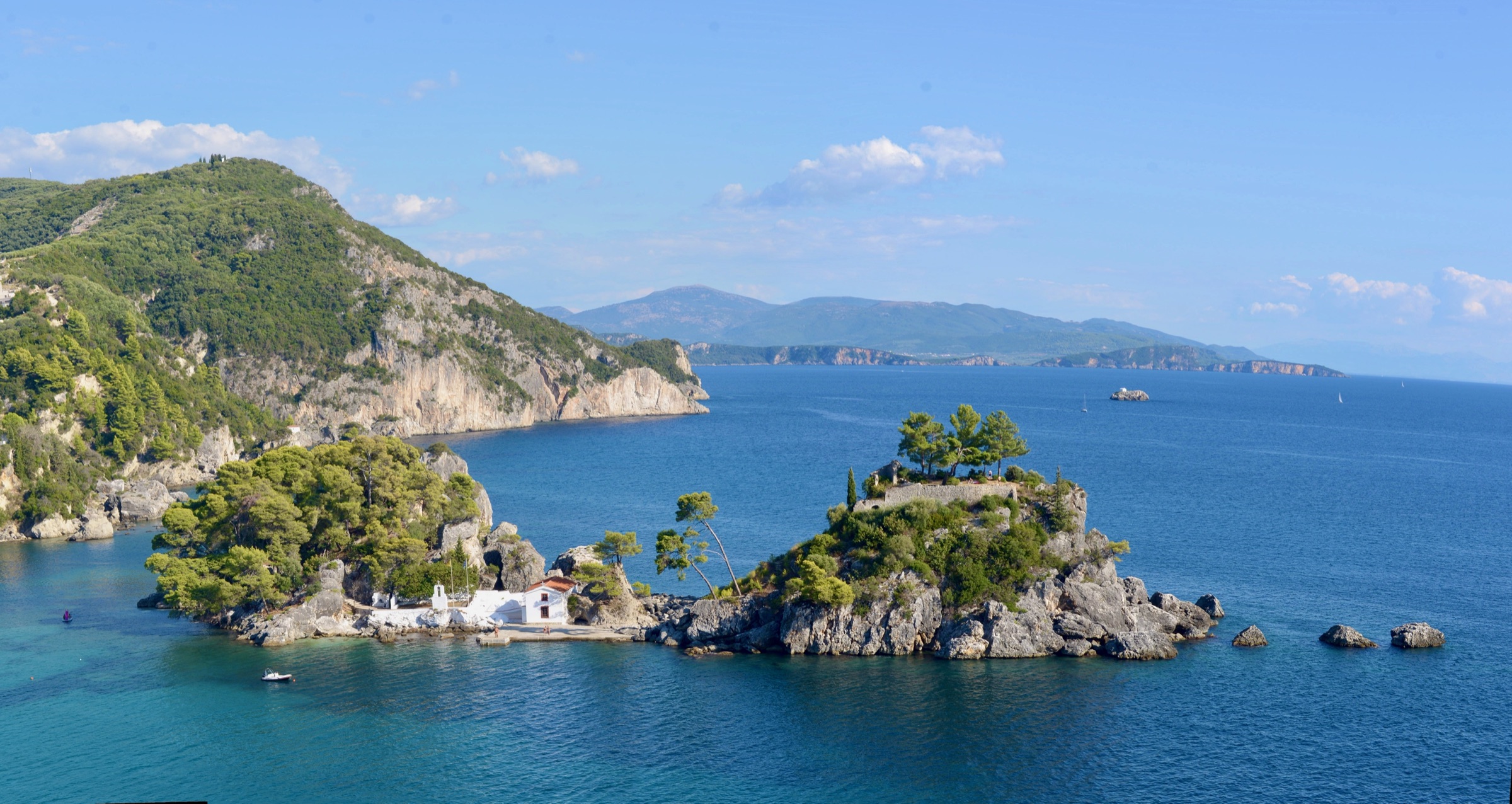
A Venetian town on an Ottoman coast
For almost four hundred years, from 1401 to 1797 and with only brief interruptions, Parga was an oddity: a small Venetian outpost on the Ottoman-ruled mainland, governed as an exclave of Corfu and supplied by sea. The castle above the town is the visible result. It was fortified, destroyed and rebuilt again and again as the powers around it changed. After Venice fell, Parga changed hands several times during the Napoleonic wars; in 1814 the Pargiots drove out the French garrison and placed themselves under British protection.
Sold in 1819
The ending is the part that stays with you. In 1819 the British handed Parga over to Ali Pasha of Ioannina, the powerful and much-feared Ottoman ruler of Epirus. Rather than live under him, practically the entire population, several thousand people, left for Corfu.
According to the accounts of the time, before they went they opened the graves, gathered the bones of their ancestors and burned them, so that nothing of their families would remain under the new ruler. The Ottoman government paid them compensation. Ali Pasha resettled the empty town, and Parga only became part of Greece in 1913.

The interesting part was not the panorama but the details in the upper works: water storage, reused masonry and the way the fort sits between the town and the approaches from inland.

What stayed with us
Parga is visually easy to consume and historically difficult to summarize. A town that burns its own ancestors’ bones rather than leave them to a new ruler is not the story you expect from a postcard harbour.