Notes from Ioannina
Ioannina was our base for four nights, and it feels different from the coastal stops of this trip. The lake changes the city’s rhythm, while the fortified old town compresses several historical layers into a very walkable area. We spent our first full day inside the walls and in the Archaeological Museum.
Inside the walls
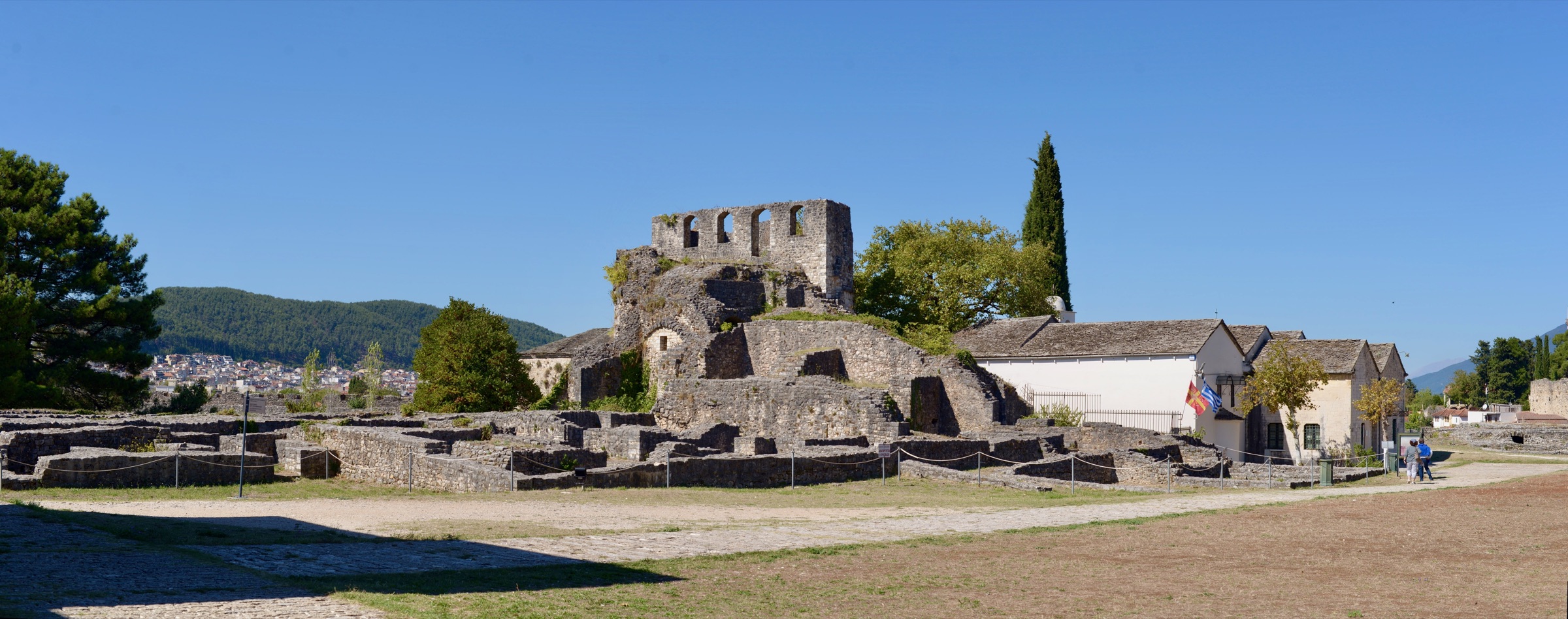
The useful way to look at the castle is not as a preserved single period, but as a place repeatedly adapted. People still live inside it: houses, lanes, mosques and a synagogue sit close enough together that the transitions are visible. In the south-eastern corner is the inner citadel, Its Kale, where Ali Pasha held court. He ruled Epirus from the 1780s until 1822, nominally for the Sultan, in practice almost as an independent prince.
Ali Pasha and the lake
Two stories are told everywhere in Ioannina. In January 1800 (sources differ on the exact year), Ali had Kyra Frosini, a young woman from a prominent local family, drowned in Lake Pamvotis together with a group of other women, usually said to number seventeen. The popular version blames an affair with Ali’s son Muhtar; the real motive is unknown. She lives on in folk songs and legend.
Twenty-two years later Ali himself was cornered by the Sultan’s troops on the small island in the lake and killed in the monastery of Agios Panteleimon. On the island they still show visitors the bullet holes in the floor. His body is buried beside the Fethiye Mosque in Its Kale; his head was sent to Constantinople.
The lakefront is the obvious orientation point. The more interesting details start once you treat the castle as a lived-in district rather than only as a monument.
Questions on lead
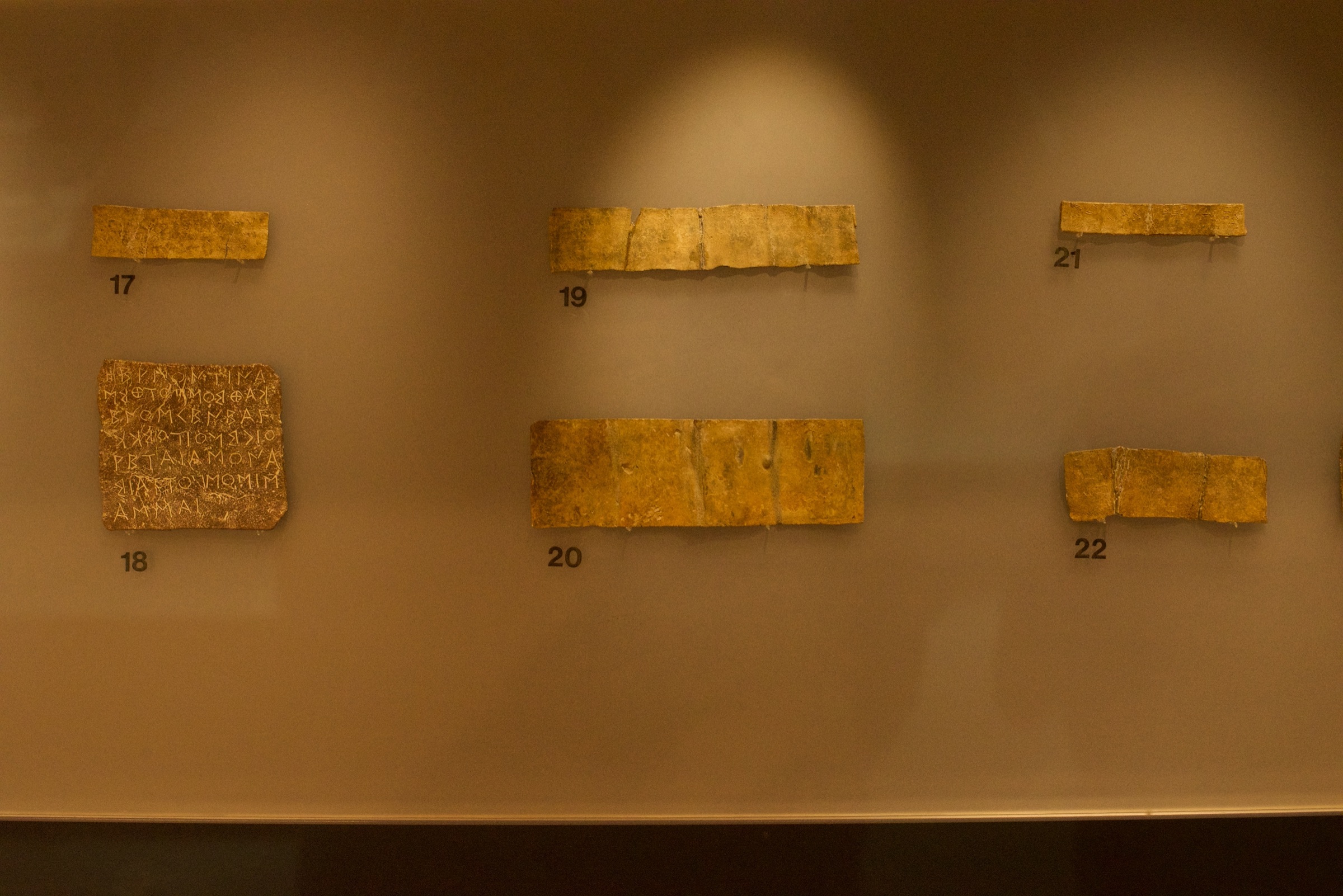
For us the highlight of the Archaeological Museum was a long display of small, crumpled strips of lead. They come from the oracle of Dodona, which we visited the next day, and they are some of the most personal documents to survive from ancient Greece.
Visitors to the oracle scratched their question onto a thin sheet of lead, then folded or rolled it so that the writing was on the inside. More than four thousand have been found, dating from the late 6th to the 2nd century BC. Most are not about politics at all. They are about health, money, children, marriage, emigration, and the suspicion that someone has put a curse on you. The museum labels read like an ancient advice column:
Kallisthenes asks Zeus Naios and Dione what is better and preferable for him to do: “For the time being all is deteriorating. Will I manage, after some time, to retain ownership of this single house and expand it?”
- Thrasyboulos wants to know which god to sacrifice to so that his eyes will heal.
- “Has Timo cast a spell on Aristovoula?” And on another tablet: “Has Lyson cast a spell on my children, my wife and myself?”
- Kylon asks whether he will have children with his present wife Meniska; Anaxippos, which god to pray to for sons from his wife Philista.
- “Will I have custody of the child?”
- Nicomachos asks whether he should take citizenship of Tarentum and leave Heraclea; Porinos from Cumae, whether to take service with “the Satrap and Hyparch”.
The last two show how far Dodona’s reputation reached: Greeks from southern Italy, asking a sanctuary in the mountains of Epirus about their future.
Other tablets, not all of them on display here, ask whether Pistos stole the wool from the mattress, whether the slave Kittos will be freed as his master promised, or whether the child Annyla is expecting is really Lysanias’.
Answers on the back
Sometimes the answer survives too, scratched on the reverse. One questioner asks which god to pray to “in order to bring to fruition what is on my mind”; the back says simply: “to Hygeia”, the goddess of health. Another asks: “Is it better for myself, my children and my wife to settle in Croton?” The reply on the back: “To Croton.” More often the reverse carries just a name or a short note, such as “of Ariston”, probably so that the tablet could be identified.
Reading the labels one after another, what stands out is how little the questions have aged: money, health, children, a house that is falling apart, and a neighbour you do not trust.