Dodona
Dodona does not make the immediate impression that Delphi does. There is no theatrical mountain approach and no dense urban fabric around the sanctuary, just a quiet valley below Mount Tomaros. That is part of its appeal. In early October the ground between the ruins was covered in small yellow autumn flowers.

A very old oracle
In Herodotus’ day Dodona was considered the oldest oracle in Greece. Before monumental temples dominated the site, the oracle was a tree: a sacred oak of Zeus. Homer already knows its priests, the Selloi, who “sleep on the ground with unwashed feet”. The priestesses of Dodona told Herodotus that a black dove had flown here from Egyptian Thebes, settled in the oak and told the people, in a human voice, to found an oracle of Zeus on the spot.
The god answered through the rustling of the leaves, through the doves, and through the sound of bronze.
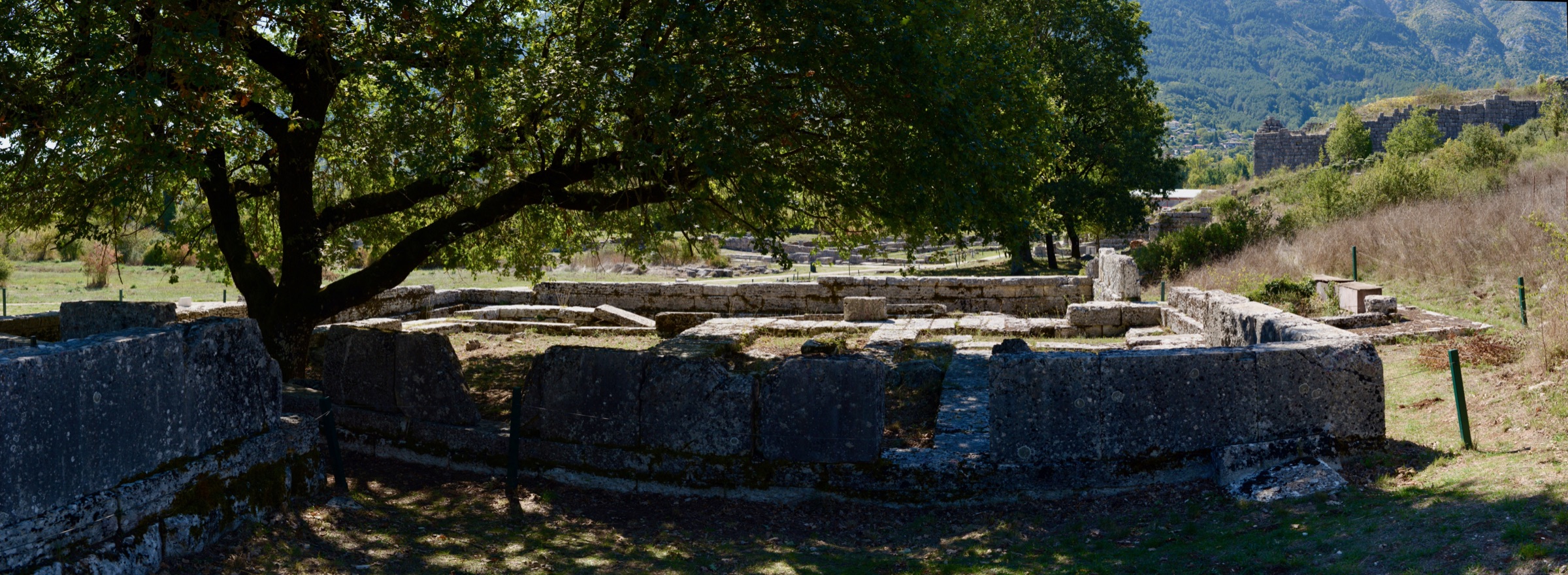
The talking bronze
According to one ancient account, the oak was once ringed by bronze cauldrons on tripods, set so close together that striking one made all of them ring. Later the people of Corfu dedicated something more theatrical: a bronze vessel next to the statue of a boy holding a whip of three chains hung with knucklebones. When the wind blew, the knucklebones struck the vessel. Strabo says that from the first note to the last you could count to four hundred.
Both became proverbial. “Dodonian bronze” was said of someone who talks on and on; “the Corcyraean whip” seems at first to have mocked the Corcyraeans themselves.
Questions on lead
Not every question was answered by rustling leaves. Visitors also scratched their questions onto small strips of lead, thousands of which have survived. We had seen them the day before in the museum in Ioannina: questions about marriage, children, debts, journeys and curses, and now and then the answer scratched on the back.
The theatre changes the scale
The large theatre belongs to a later and far more monumental phase. It was built under King Pyrrhus of Epirus in the early 3rd century BC (the Pyrrhus of the “Pyrrhic victory”) and seated around 17,000 people for the festival of the Naia. Under the Romans the lowest rows were removed and a wall was built to turn it into an arena for animal fights. Standing there makes the expansion of the sanctuary easier to understand: an older cult place gradually acquired the architecture of a major regional centre.
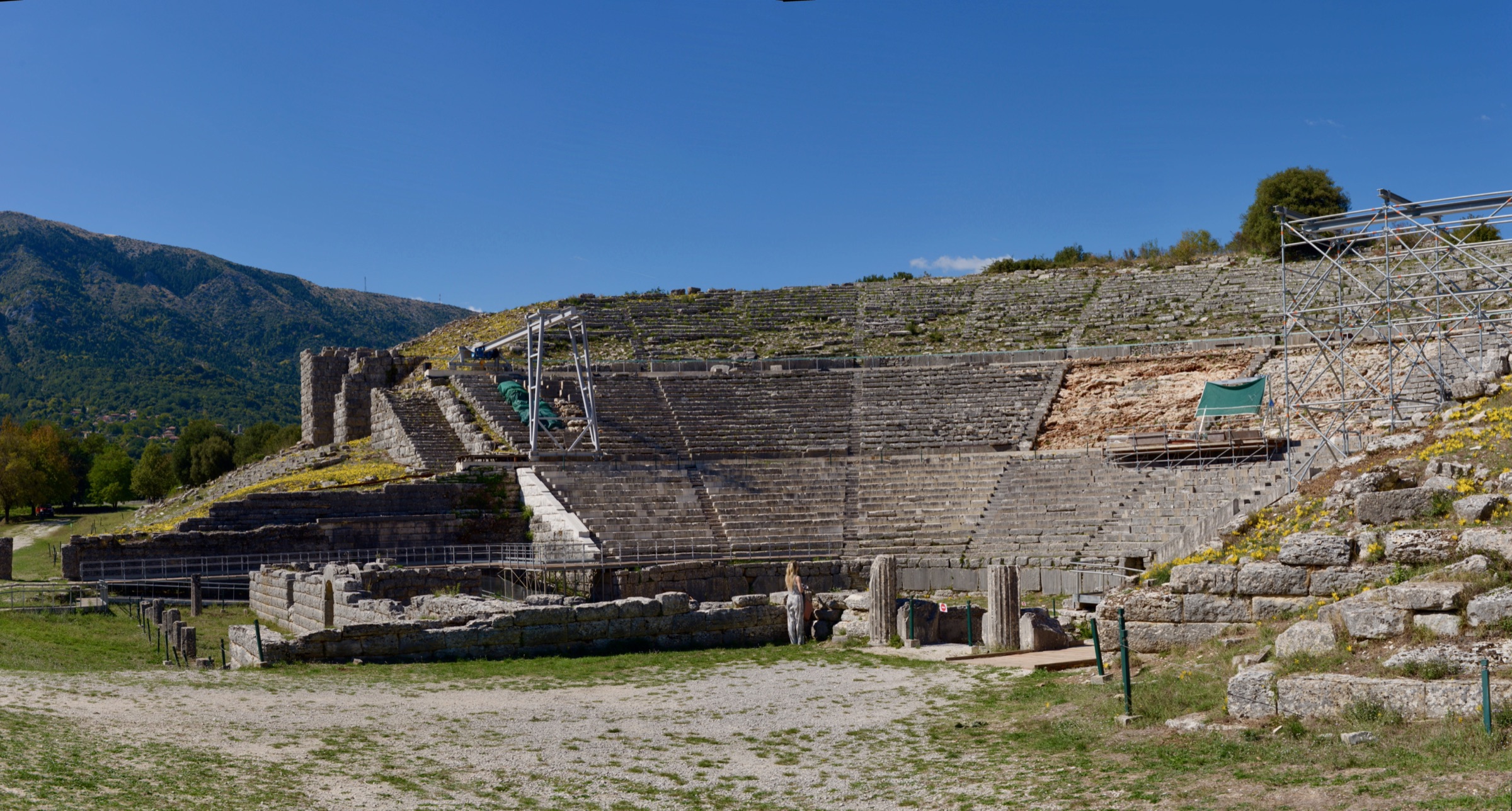
The theatre is visually dominant today, but mentally separating it from the earlier oracle makes the site much more interesting.
The oak itself is said to have been cut down at the end of the 4th century AD, when the old cults were suppressed. The oracle had been speaking for well over a thousand years.